Create an intricate 3D asset which requires high-end capabilities, expensive software, as well as hours of manual work. Designers had to carefully sculpt geometry, refine texture, and optimize models before they could be produced. Artificial intelligence is revolutionizing this process. Modern tools make it possible to rapidly create an 3D image using an image file making 3D design available to anyone from beginners business owners, professionals and even students.
3D AI Studio demonstrates how advanced the technology has come and offers a simplified set of tools to aid creators to go from concept to model in a fraction time.
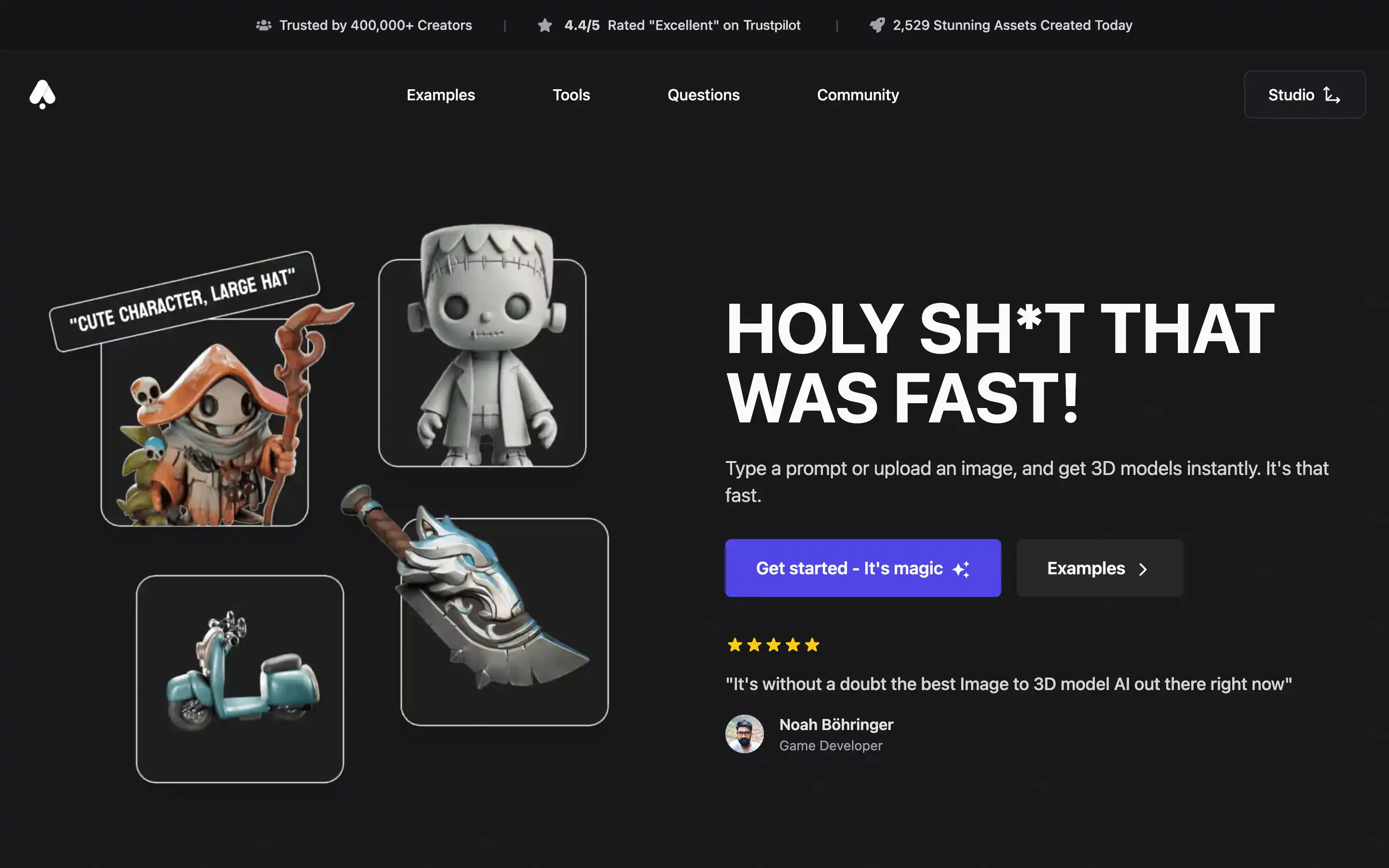
Rapid 3D Creation is in High Demand
Many industries are experiencing an increase in demand for 3D content that is high-quality. Gaming, product design films, architecture, and e-commerce all rely on real-life visual assets to effectively communicate ideas and to attract audiences. Teams are seeking ways to create models faster without sacrificing quality as the demand for them grows.
AI-powered workflows and image to 3D models are free tools that play an important role in this. Instead of relying on complex modeling software to begin creating an image, the creators upload a picture and let AI process the edges, shapes as well as the textures and aspects. The software reconstructs the visual information to form a 3D structure.
This approach allows for more experiments and decreases the amount of time needed to create assets.
Photo-to-3D Technology: What is it?
When a photo to 3D model process begins, artificial intelligence examines the image in detail. It can identify patterns, predict depth and recreate the object in 3D. The advanced algorithms that are trained on huge datasets ensure that the generated models have realistic proportions and surfaces.
This technology is particularly beneficial to speed up prototyping. Designers can snap a picture of a sketch or physical item, and then transform it into a model that they can refine. Developers can quickly create placeholder assets, allowing them to test layouts or environments prior to committing to very detailed modeling.
The tools on platforms like 3D AI Studio can automate the process of texturing and optimizing, which results in a final result that can be used.
Practical Benefits for Creators and Businesses
Accessibility is the main benefit of using picture to 3D models technology. AI-powered software allows for greater involvement in 3D modeling. Traditional modeling requires years of expertise.
Another key benefit is efficiency. Automated Retopology, texture generation, and other repetitive tasks are eliminated. This lets creators focus more on design and creativity instead of technical processes. Businesses also benefit, since speedier production cycles result in faster project completion and lower expenses.
Marketing teams can create visual content quicker as educators create interactive learning materials, and product designers can show prototypes earlier in the creation process.
Flexible Workflows and Organized Workflows Options
Modern AI-based platforms can do more than simply generate models; they also help manage them. Asset libraries allow users to organize and store projects in a systematic manner. This makes it simpler to manage files and search for them.
Compatibility is just as important. An image that is 3D can be exported in various formats that allow seamless integration with games engines, rendering tools, or 3D printing systems. The flexibility of the generated models allows them to be utilized across many professional workflows.
Look Ahead: AI-driven 3D Design in the future
The capabilities of 3D creation are growing as artificial intelligence improves. The future tools will produce more complicated models, build entire environments, and automate even additional steps of the production chain.
As platforms like 3D AI Studio continue to develop, creators will enjoy even greater control, speed, and flexibility when creating digital assets.
Conclusion
Design is being transformed by the ability to transform images into digital objects that are realistic. Converting photos or images into an 3D object is now simple quick, efficient, and speedy by using tools that allow workflows for image-to-3D models.
As technology advances making a 3D concept from images will soon become a vital part of modern design. This will allow designers to create their designs faster and with fewer limitations than previously.